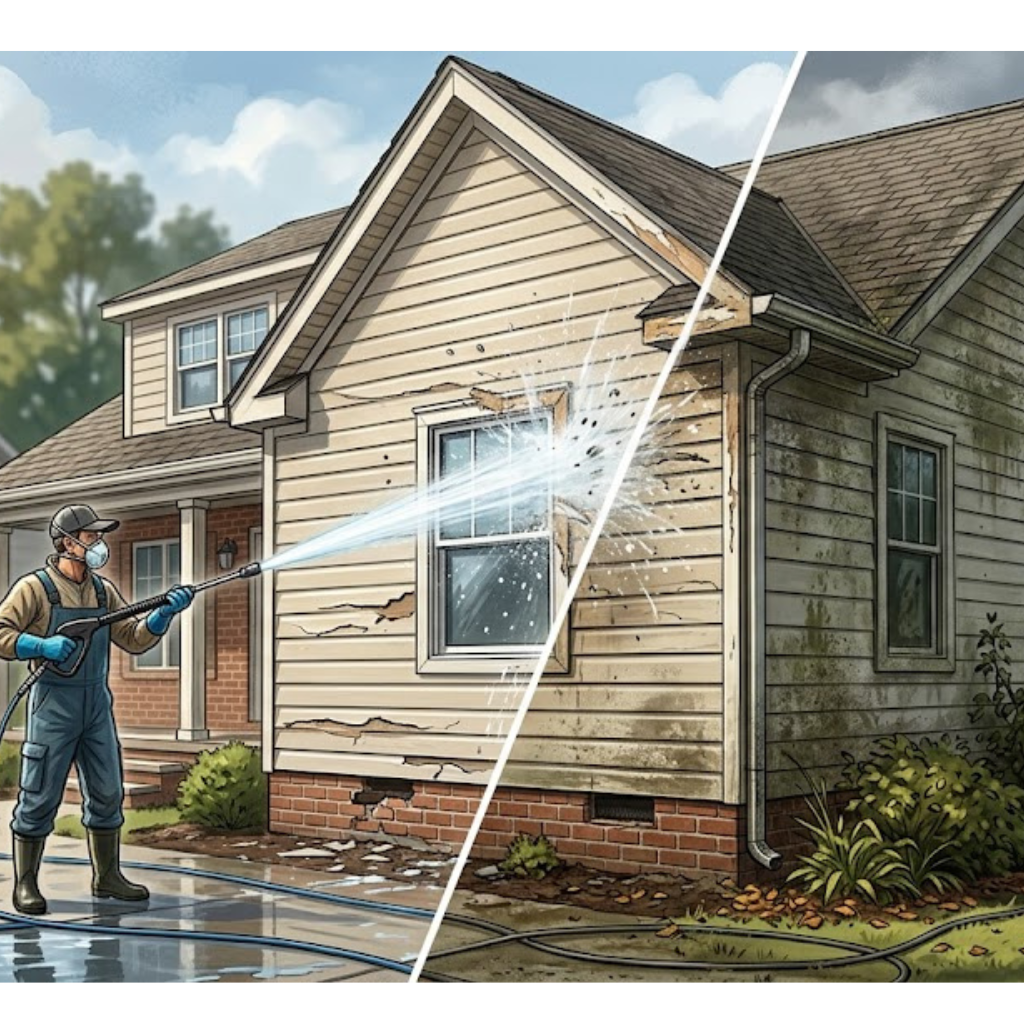

Is Power Washing Bad for Your House? What Hawaii Residents Need to Know
You've probably read something online that made you nervous. A forum post, a neighbor's warning, a headline about siding damage or water getting into walls. So now you're asking: is power washing bad for your house?
Here's the short answer. No, it's not, as long as the person doing it knows what they're doing. Almost every horror story you've heard comes down to wrong pressure, wrong technique, or the wrong person holding the wand. At
Cornerstone Pressure Washing, we've cleaned homes on Oahu for over 20 years, and we've also seen what happens when a house gets washed incorrectly. The difference is real, and it matters.
Hawaii homes face exterior challenges that most of the country doesn't. The humidity, salt air, tropical rain, and year-round heat create ideal conditions for mold, algae, mildew, and grime to build up fast. That makes regular exterior cleaning more necessary here, not less.
What Actually Makes Power Washing Bad for a House
Power washing itself isn't the problem. Pressure is a tool. Used correctly, it strips years of buildup off concrete, siding, roofs, and driveways without leaving a scratch. Used incorrectly, it can drive water behind walls, strip paint, crack mortar, and loosen siding panels.
The question isn't whether power washing is dangerous. It's whether the person doing it understands the surface they're cleaning and the pressure that surface can handle.
DIY Pressure Washing Risks Most Homeowners Don't Expect
When considering if power washing is bad for your house, it’s important to acknowledge the difference between professional and DIY power washing. Renting a pressure washer from a hardware store feels straightforward. It's not. Consumer-grade units can reach 2,800 PSI, and commercial units go well past 4,000 PSI. That's a lot of force aimed at surfaces that weren't built to take a direct hit.
Common DIY mistakes include standing too close to the surface, using a zero-degree nozzle on wood or vinyl, spraying upward at an angle that drives water under siding, and skipping a surface assessment entirely. None of these show up on the rental agreement.
The result can be water soaking into wall cavities, mold growth behind siding, paint stripped down to bare wood, or cracked mortar on older brick. These repairs cost far more than a professional wash would have.
What Happens When PSI Is Too High for the Surface
Every exterior surface has a pressure threshold. Go over it and you cause damage. Stay under it and you clean effectively.
Vinyl siding, for example, needs a low-pressure setting, typically under 1,500 PSI, with a wide-angle nozzle. Roof shingles should never see high pressure at all. Too much force strips the granules off asphalt shingles, shortening the roof's lifespan and voiding manufacturer warranties in some cases.
Concrete driveways can handle higher pressure, but the angle and distance still matter. Brick and mortar joints on older homes are especially vulnerable. Decades-old mortar can disintegrate under a stream of water that would barely dent a newer surface. Wood decks and fences need a soft touch and the right cleaning solution, not brute force.
Knowing what PSI to use, from which distance, with which nozzle, on which surface type, is the core skill that separates professional results from costly mistakes.
When Soft Washing Is the Right Call Instead
Some surfaces shouldn't get anywhere near high pressure. Roofs are the clearest example.
Soft washing uses low-pressure water, usually under 500 PSI, combined with a biodegradable cleaning solution that breaks down mold, algae, lichen, and mildew at the source. The solution does the work. The water rinses it away gently.
This method works on asphalt shingles, clay and concrete tiles, painted wood, stucco, and any surface where high-pressure water would cause more harm than good. It also treats the biological growth rather than just washing it off, which means results last longer.
At Cornerstone, our approach is also eco-friendly. We use cleaning solutions that are safe for the environment, which matters on an island where runoff affects the surrounding ecosystem directly.
The Real Risks of Skipping Regular House Washing in Hawaii
Many homeowners ask: is power washing bad for your house? Here's the question homeowners rarely ask: what does it cost to not clean your home's exterior?
Mold that sits on siding long enough works its way into the material itself. At that point, you're not cleaning it off. You're replacing what it damaged. Algae on wood decks traps moisture and speeds up rot. Salt deposits on metal fixtures and window frames cause corrosion that shows up as rust stains, failed seals, and eventually structural issues.
Your home's exterior is its first line of defense against Hawaii's climate. Keeping it clean isn't cosmetic. It protects the surfaces underneath, extends the life of paint and sealants, and lets you spot damage early before it becomes expensive.
Curb appeal matters too, especially if you're ever planning to sell. A clean exterior signals that a home is maintained. A dirty one raises questions.
How Cornerstone Pressure Washing Protects Your Home on Oahu
We've been cleaning residential and
commercial properties on Oahu since 2001. That's over two decades of working on Hawaii homes specifically, which means we understand how local climate conditions affect exterior surfaces and how to clean them without causing damage.
We comply with OSHA and EPA standards on every job. Our equipment is professional grade, and our team calibrates pressure settings and cleaning solutions to the specific surface and condition we're working with. We don't apply a single setting to every job. Each property gets assessed before we start.
We also back our work with a 100% satisfaction guarantee. If you're not happy with the results, we make it right.
So is power washing bad for your house? Not when it's done by people who know what they're doing on surfaces that need it.