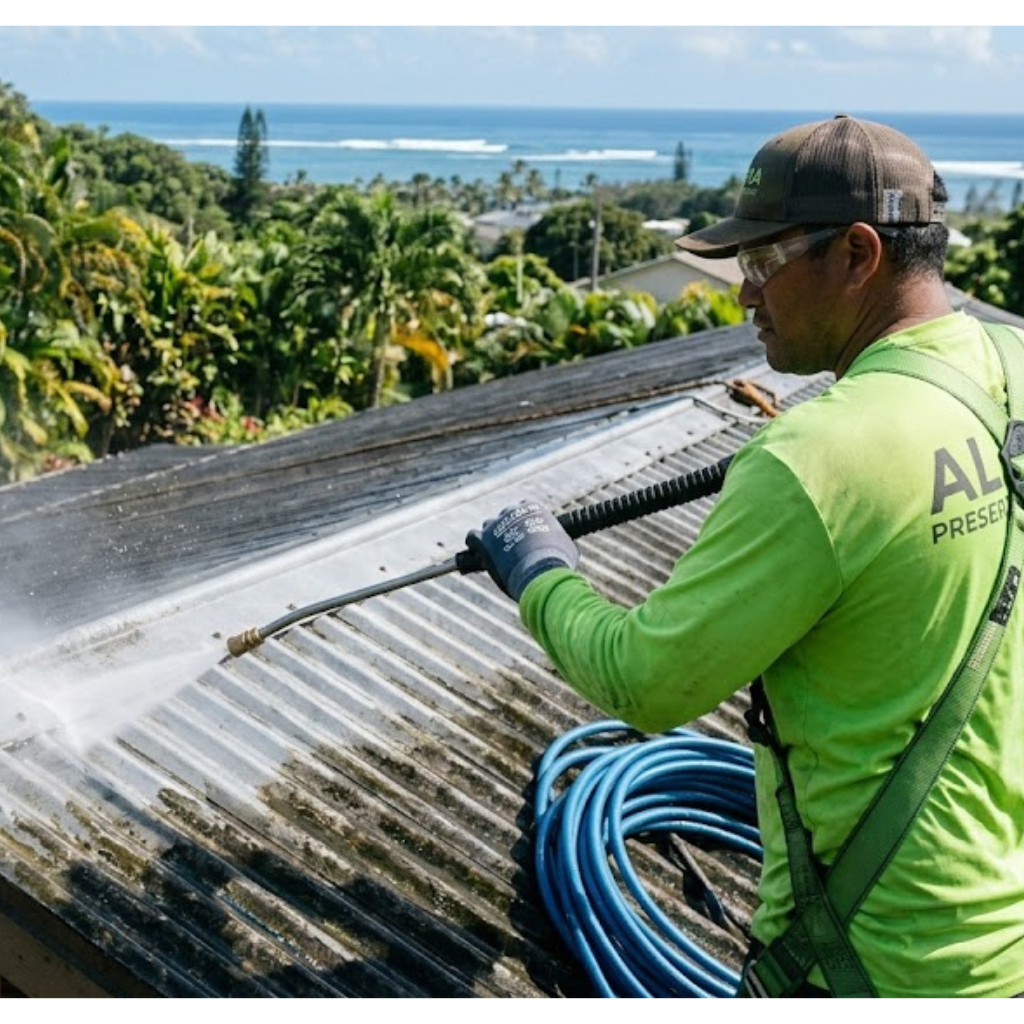

How Does Power Washing Work on Oahu?
If you've ever watched a pressure washing crew work and wondered what's actually happening beyond water hitting a surface, you're asking a good question. The process has more going on than it appears. How does power washing work on Oahu specifically? It works the same way it does anywhere at a mechanical level, but the conditions here on the island change how a professional crew approaches every job. The climate, the surface types, and the environmental requirements all shape the process from start to finish.
Here's a straightforward breakdown of what's actually happening when a professional pressure washing crew works on your property.
The Core Mechanics Behind How Pressure Washing Works
At its most basic, pressure washing forces water through a pump at a rate and force high enough to physically dislodge dirt, biological growth, and buildup from exterior surfaces. A gas or electric-powered motor drives the pump, which takes in water from a supply line and compresses it before pushing it through a hose and out through a nozzle.
The force of that water stream does the actual cleaning work. It breaks the bond between contaminants and the surface beneath them. On hard surfaces like concrete driveways and
parking structures, that force strips away years of accumulated grime, oil, algae, and mineral deposits in a fraction of the time any manual cleaning method would require.
What PSI and GPM Mean for Your Property
Two numbers define a pressure washer's cleaning capability: PSI and GPM.
PSI stands for pounds per square inch. It measures how much force the water exerts against the surface. High PSI is what strips stubborn material loose. A consumer-grade machine might produce 1,500 to 2,000 PSI. Commercial-grade equipment runs significantly higher, which is why professional results look different from what a rental machine delivers.
GPM stands for gallons per minute. It measures how much water flows through the machine per minute. Where PSI strips debris from the surface, GPM carries it away. You need both working together. A machine with high PSI but low GPM can blast material loose but leave it sitting on the surface. A machine with high GPM but low PSI moves a lot of water without much force behind it.
Multiply PSI by GPM and you get what the industry calls cleaning units, the real measure of total cleaning power. Professional crews calibrate both numbers based on the surface and the type of contamination they're dealing with.
How Pressure Washing Nozzles Control the Cleaning Process
The nozzle at the end of the wand is where the water's pressure and flow get shaped into something precise. Nozzles are color-coded by spray angle, and that angle changes everything about how the water hits a surface.
A narrow spray angle concentrates force into a tight stream, which delivers maximum pressure at the point of contact. That's useful for stripping heavy deposits from dense surfaces like concrete. A wide spray angle spreads the water across a broader area, which drops the pressure and increases coverage. That's better for rinsing, for softer surfaces, or for larger flat areas where concentrated force would cause damage.
Professional technicians switch nozzles based on what the surface can handle and what the job requires. Use a nozzle that's too aggressive on wood siding or painted stucco and you'll strip the surface itself, not just the dirt. Matching the nozzle to the material is one of the most important judgment calls in the entire process.
How Does Power Washing Work on Oahu to Remove Mold, Algae, and Salt Buildup on Oahu
Oahu's climate creates a specific set of surface problems that don't exist the same way on the mainland. Humidity stays high year-round. Salt air works its way into surfaces near the coast. Shade areas accumulate mold and mildew fast. Red dirt from the island's soil gets tracked onto driveways and compacted into pavers. Algae grows on rooftops, walls, and concrete surfaces faster here than in drier climates.
The pressure washing process targets all of these. Water at the right PSI physically disrupts the structure of biological growth and lifts it off the surface. Salt residue that has built up over time gets flushed away. Organic staining that has set into porous concrete surfaces responds to the combination of pressure and volume.
Not all of it comes off with water alone, which is where cleaning agents come in.
Why Cleaning Agents Matter in the Pressure Washing Process
Professional pressure washing rarely relies on water pressure alone for anything beyond basic rinse work. For mold, algae, mildew, and organic staining, a cleaning solution gets applied to the surface before or during the wash.
These solutions break down the cellular structure of biological growth at a chemical level, which makes the pressure wash far more effective. Instead of forcing mold off a surface through pressure alone, the detergent does the chemical work first and the pressure wash clears the residue. The result is a more thorough clean with less risk of surface damage from excessive force.
At
Cornerstone Pressure Washing, we use eco-friendly cleaning solutions that comply with EPA standards and won't harm the surrounding vegetation or drainage systems on your property.
How a Professional Pressure Washing Job Works from Start to Finish on Oahu
Understanding how does power washing work on Oahu means understanding what a professional crew does before a single drop of water hits your surface.
The job starts with a site assessment. A trained technician looks at the surface material, the type and level of contamination, the surrounding landscape, and any access considerations specific to your property. Delicate plantings get protected. Nearby drains get noted for wastewater containment compliance.
Pre-treatment comes next for surfaces with heavy biological growth. The cleaning solution gets applied and given time to work before the pressure wash begins.
The wash itself moves methodically across the surface, with the technician adjusting distance, angle, and nozzle type as the conditions change. Proper distance from the surface matters as much as pressure setting. Move the wand too close and you risk surface damage. Too far and you lose effective cleaning force.
The rinse phase clears residue and cleaning solution from the surface. Wastewater containment is part of every professional job on Oahu. EPA and state regulations require that runoff, which can carry detergents and contaminants, be directed appropriately and not allowed to enter storm drains untreated.
What Surfaces Respond Best to Power Washing on Oahu
How does power washing work on Oahu across different property types? The process adapts based on what you're cleaning.
Concrete driveways and walkways handle high-pressure treatment well and show some of the most dramatic results. Pavers respond well to pressure washing but require attention to the joints to avoid displacing sand or gravel fill. Pool decks and lanais often combine concrete or tile surfaces with areas adjacent to water, which requires careful water management during the job.
Building exteriors on commercial properties, including storefronts, parking garages, and multi-unit
residential buildings, represent some of the most demanding pressure washing work on Oahu. Square footage is high, surface types vary across the same building, and the visual standard is exacting because these properties face the public every day.
If you want a professional assessment of your property before any work begins,
reach out to us at Cornerstone Pressure Washing. We serve residential and commercial properties across Oahu seven days a week and will walk you through exactly what the job involves before we start.